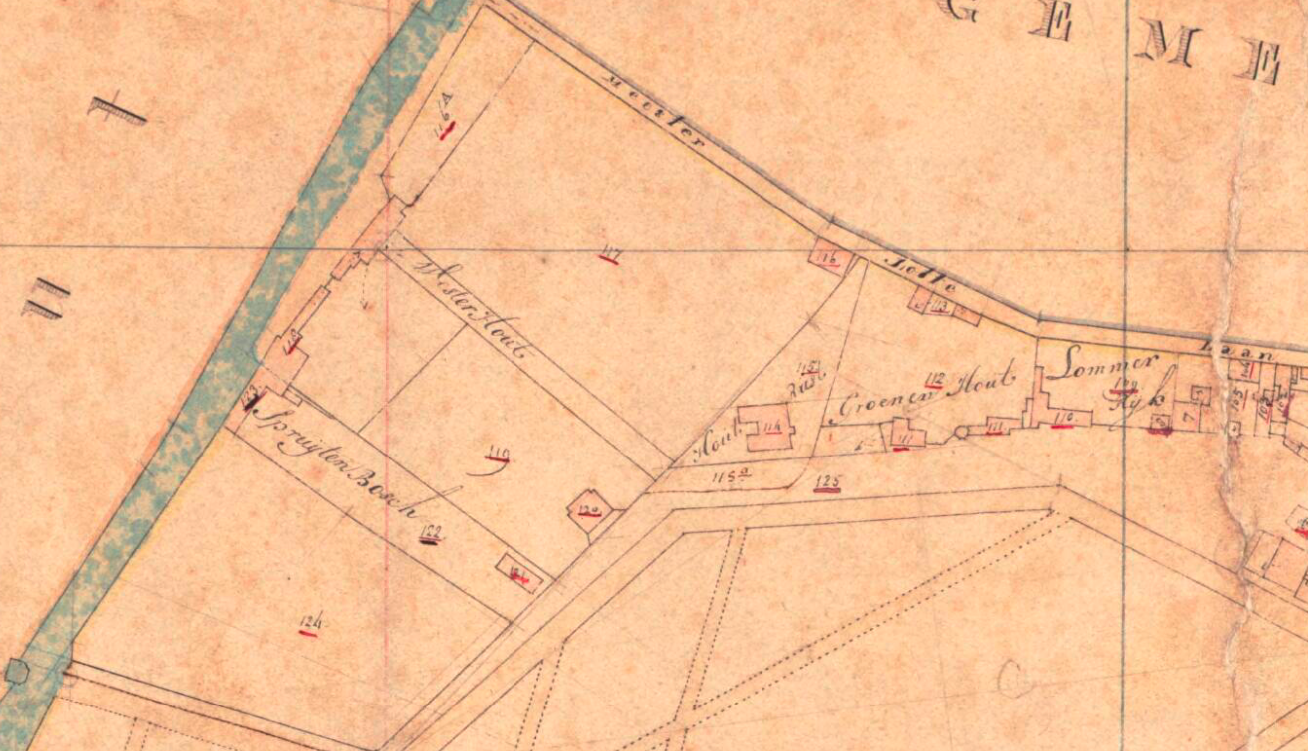
Soms komen zaken opeens op een fijne manier bij elkaar. In dit geval biedt de combinatie van een recente publicatie, en ontwikkelingen bij beheerders van historische data opeens handvatten om een stukje dat ik al langer wilde schrijven, daadwerkelijk te schrijven.1De bewuste publicatie is: Lenneke Berkhout, ”De beste en kundigste enteniers van geheel Europa”, in: Cascade bulletin voor tuinhistorie, Jaargang 2020 (29), p7-32. Onderwerp van dit postje is de kwekerij de Jonge Entery in Beverwijk, die rond het jaar 1800 eigendom was van de kweker Steven Rentink. Rentink is op dit moment tamelijk onbekend, maar is door mij al wel genoemd in verband met de tuin van Westerhout (op de grens van Haarlem en Heemstede).2Henk van der Eijk, ‘Westerhout na Adriaan Snoek: Montsche en Michael‘, in Cascade bulletin voor tuinhistorie, Jaargang 2017 (26), nr. 1, p9-24. Hij komt tussen 1797 en 1805 enkele malen voor in het kasboek van Jan Jacob Brants, eigenaar van Westerhout.
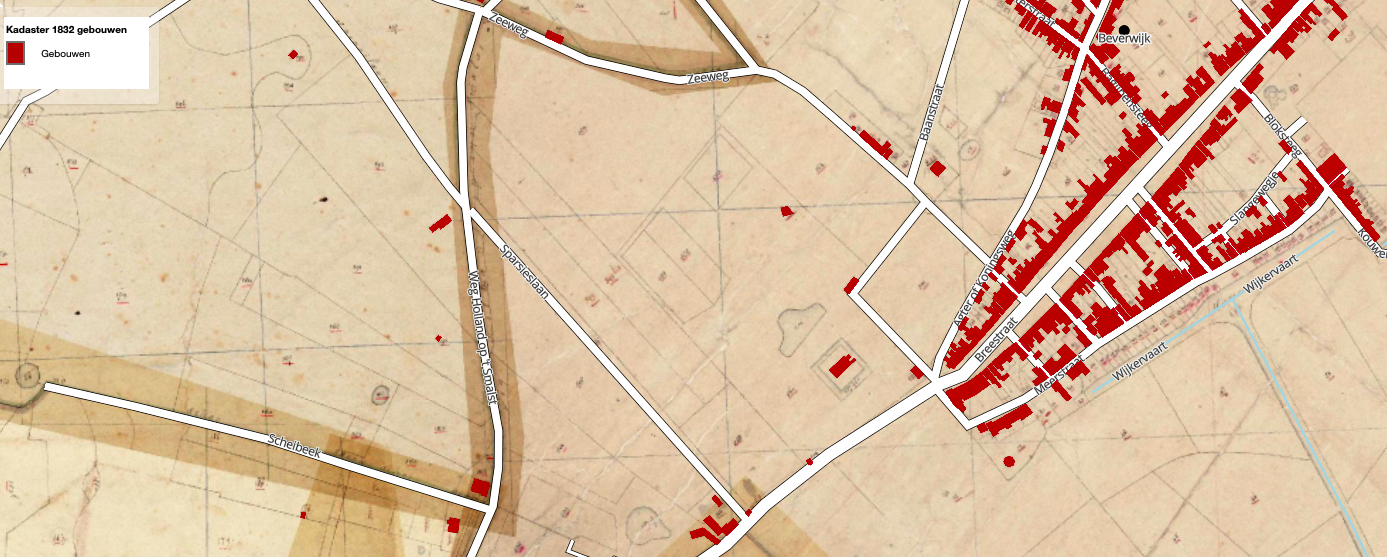
Ontwikkelingen bij HisGis, die hebben besloten om kadastrale minuutplannen van een groot deel van Noord-Holland aan elkaar te knopen, maken het mogelijk deze deelkaarten in hun bredere context te tonen.3Dank aan Jan Holwerda, die ons hier via het Cascade weblog op wees. Donkere banden op de afbeelding links geven aan waar de oorspronkelijke begrenzingen van de verschillende kaarten waren (klik op afbeelding voor een vergrote weergave). Omdat het grondbezit van de eigenaar van de Jonge Entery destijds in twee verschillende gemeenten lag, is dit een hele fijne en behulpzame innovatie. Hoewel de eigendomsregistratie (Onderliggende Aanwijzende Tafels, ‘OAT’) van de eerste kadastrale kaarten uit 1832 dateert, zijn de bewuste minuutplannen al in 1817 gemeten en getekend.4Het gaat om deze minuutplannen: Gemeente Beverwijk, sectie A genaamd Beverwijk; Gemeente Wijk aan Zee en Wijk aan Duin, sectie B genaamd Wijk aan Duin, Eerste Blad.
de wede Johannes Korner (of Körner)

In de OAT van de gemeente Wijk aan Zee en Wijk aan Duin lijkt de eigenaar als beroep simpelweg Eigenaresse te hebben, maar het is goed mogelijk dat ik dat verkeerd lees. De weduwe van Jan Korner woonde volgens de OAT in de naburige gemeente, Beverwijk.5Waar ‘Korner & Const’ lijkt te staan zou je ‘& Comp’ verwachten, maar dat staat er dus niet. In de gemeente Beverwijk zelf stond haar eigendom te boek onder de naam wede Johannes Korner, boomkwekers.6Zoon Willem Körner zou de kwekerij na haar dood voortzetten. Haar volledige bezit (dat in Wijk aan Duin in paars, in Beverwijk in oranje) is hieronder op kaart weergegeven. De straat waaraan het huis en bijgebouwen staan heette (en heet) de Velserweg, de weg die het bezit doorsnijdt heette Holland op ‘t Smalst. De huidige Vondellaan (destijds Sparsielaan) vormde de noordoostelijke begrenzing van het terrein.

Op 3 oktober 1835 overleed Alida Welpshoff, weduwe van J. Körner, op 86-jarige leeftijd.7Overlijdensbericht in de Opregte Haarlemsche Courant, 8 oktober 1835. De weduwe en haar man zijn van belang omdat zij de Jonge Entery in 1805, na het overlijden van Steven Rentink, hadden gekocht. In de Oprechte Haerlemsche courant van 17 september 1805 adverteerde ene Jan Körner als volgt:
Jan Körner, de BOOMKWEKERY, genaamd DE JONGE ENTERY, van wijlen STEVEN RENTINK, by den Beverwijk, gekogt hebbende, met voorneemen gemelde Kwekery van Wilde Americaansche Vruchtboomen met alle mogelyke vlyt en oplettenheyd te continueren; beveelt zich hier mede in de gunst van allen, die gemelde Huis met hunne beveelen vereerd hebben, kunnende van een naauwkeurige en civiele bediening verzeekert zyn.
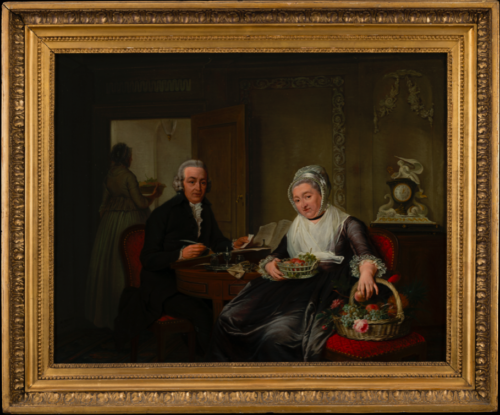
Steven Rentink
Bij zijn overlijden op 21 juli 1805 werd dan ook al aangegeven dat de ‘affaire’ van Steven Rentink in goede order [zal] worden gecontinueerd.8Overlijdensbericht in de Oprechte Haarlemse courant van 23 juli 1805, p3. De ‘boomkweker alhier’ (Beverwijk) overleed aan ‘Longteering’. Rentink was op dat moment 58 jaar en 5 maanden oud, hetgeen aannemelijk maakt dat het om dezelfde Steven Rentink gaat die op 10 maart 1747 in Gendringen werd gedoopt. Hij werd in 1788 benoemd in de Vroedschap van de stad Beverwijk, vanaf 1795 als lid van de municipaliteit, en in april 1796 benoemd in het ‘effectief stedelijk bestuur’ van Beverwijk. In 1795 raakte hij in zijn hoedanigheid als stadsbestuurder gewond nadat een conflict met Franse troepen was uitgelopen op een handgemeen.9J. van Venetien, A. Schweitzer en J van der Linden, Dagverhaal der doormarcheerende troepen, Ledenbulletin 23 van het Historisch Genootschap Midden-Kennemerland, 1999. Zijn aanwezigheid in Beverwijk kan worden getraceerd tot 20 juli 1786, toen hij in een advertentie in de Oprechte Haerlemsche courant werd aangeduid als aanspreekpunt voor een positie als tuinman op een (niet genoemde) buitenplaats tussen Alkmaar en Haarlem. Op dat moment was hij al ‘Boomqueeker in de Beverwijk’.
De Jonge Enterij
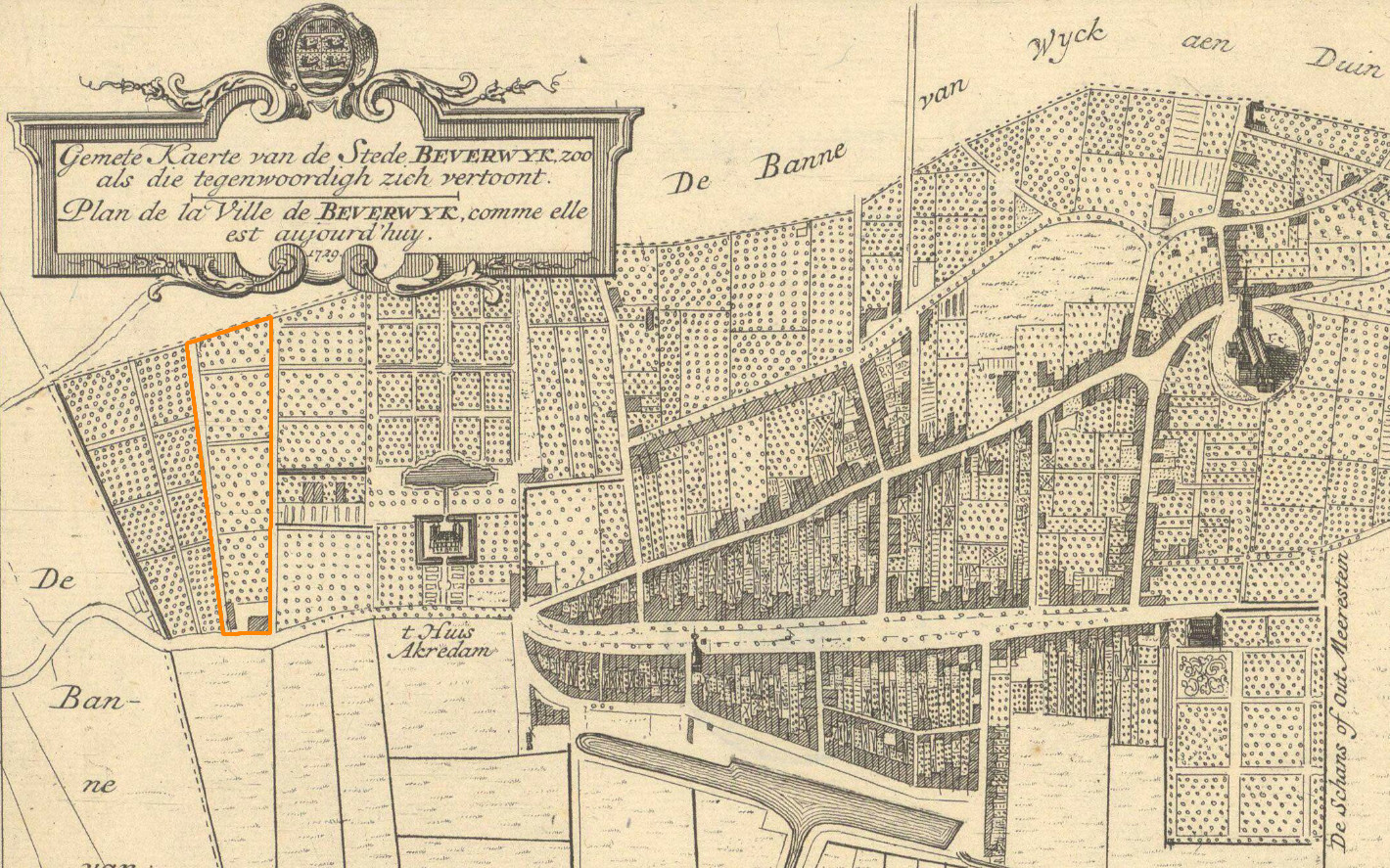
Mede omdat in 1805 de Gasthuisweide uit de boedel van Steven Rentink werd gekocht door de Nederlands-Hervormde Gemeente Beverwijk, is onduidelijk hoe de grootte van Rentinks Jonge Entery zich verhield tot het bezit van de weduwe Korner, enkele decennia later. De kern van de kwekerij lijkt uit het Beverwijkse deel te hebben bestaan. Uit een krantenbericht uit 1714 blijkt dat een kwekerij met die naam reeds bestond, ‘staende en leggende even buyten de Stede Beverwijck in desselve Jurisdictie en in den Banne van Wijck aen Duyn’.10Oprechte Haerlemsche courant, 7 april 1714: ‘Op Vrydag, den 13 April, ‘s namiddags ten 4 uuren, fal men binnen de Stede Beverwijck in de Herberg d’Oude Prins verkopen een fchoon fterck en weldoortimmert Huys met een ftuck Geeft-Lant, genaemt de jonge Entery, en tot een Entery geapproprieert, ftaende en leggende even buyten de Stede Beverwijck in defelve Jurisdictie en in den Banne van Wijck aen Duyn , t’famen groot 1881 Roeden, tegenwoordig in huur gebruyckt by Baftiaen van Rofsum, Entenier : Die nader Onderrichting begeert, adreffere fig aen Melchior van Kleynenberg, Notaris en Procureur binnen de Stad Haerlem.’ Een plattegrond van Beverwijk uit 1729 laat duidelijk zien dat de grens tussen beiden destijds niet op de weg Holland op ‘t Smalst lag, maar op circa tweederde van het perceel langs de Sparsieweg in Beverwijk.

Die kaart laat ook zien hoe dicht bij de buitenplaats Akerendam de kwekerij lag. Niet aangegeven op die plattegrond is de grotendeels in Velsen gelegen buitenplaats Scheybeek, ten zuidwesten van de Jonge Entery.11Een deel van het grondgebied van Scheybeek lag weliswaar in Beverwijk, maar het zou tot een grensverlegging in 1818 duren eer de volledige buitenplaats op Beverwijks grondgebed kwam te liggen. Zie Christian Bertram, Noord-Hollands Arcadia. Ruim 400 Noord-Hollandse buitenplaatsen in tekeningen, prenten en kaarten uit de Provinciale Atlas Noord-Holland (Alphen aan den Rijn 2005), p282. De kwekerij van Rentink lag derhalve tussen twee buitenplaatsen in; met Scheybeek deelde de kwekerij in ieder geval begin 19de eeuw een eigendomsgrens.12Christiaan Stumphius, eigenaar van Akerendam, was een van executeurs van Rentinks nalatenschap.
In haar eerder aangehaalde artikel stelt Lenneke Berkhout dat de bekende kwekersfamilie Moerbeek een kwekerij had in Beverwijk, die zij ‘de Oude Enterij’ begonnen te noemen na het starten van een nieuwe kwekerij in de Diemermeer.13Lenneke Berkhout, ”De beste en kundigste enteniers van geheel Europa”, in: Cascade bulletin voor tuinhistorie, Jaargang 2020 (29), p14. De naam ‘Oude Enterij’ komen we inderdaad tegen in 1724, toen op 12 september Jacob Moerbeek bomen van zijn Beverwijkse kwekerij aanprees: ‘By Jacob Moerbeek by de Oude Enterij by de Beverwijk’. Tien jaar eerder al zagen we de naam Jonge Entery in advertenties verschijnen. Waren beide namen het resultaat van een strijd tussen twee concurrerende kwekers, of simpelweg een constatering van feiten? Het zou op zijn minst interessant zijn om te weten waar die Oude Enterij lag.14Tevens beschrijft zij dat Jacob Moerbeek rond 1730 een kwekerij (Roosentree) kocht, die tegen de buitenplaats Scheybeek aan lag. Het huis van Moerbeek werd later de Orangerie van Scheybeek (Lenneke Berkhout, op.cit., p30n66.). We zagen al dat de Jonge Entery eveneens grensde aan Scheybeek. De concurrentie zal hevig zijn geweest.
Wilde Americaansche Vruchtboomen
De omschrijving van Rentinks kwekerij toen deze werd overgenomen door Johannes Korner is intrigerend: het was een ‘Kwekery van Wilde Americaansche Vruchtboomen’. Vooralsnog is mij geen catalogus van Rentink bekend, noch advertenties waaruit duidelijk wordt welk sortiment hij verkocht. De enige bekende bron waarin Rentink tot nu toe wordt genoemd, het kasboek van Jan Jacob Brants, geeft weinig informatie: rekeningen werden in hun geheel betaald, en helaas zijn de bijbehorende kwitanties tot nu toe niet teruggevonden. Alleen na Rentinks overlijden volgt concrete informatie, als Brants de laatste openstaande rekening voldoet. Het resultaat is echter van een teleurstellende banaliteit: ‘4 karzebomen, ƒ20,-‘.15Kersenbomen, dus. Stadsarchief Amsterdam, Toegang 88, Archief van de familie Brants en aanverwante families, inv.nr. 129 (Kasboek Jan Jacob Brants betreffende de buitenplaats Westerhout bij Haarlem, 1792-1808), betaling genoteerd op 1 november 1805.
Footnotes
| ↑1 | De bewuste publicatie is: Lenneke Berkhout, ”De beste en kundigste enteniers van geheel Europa”, in: Cascade bulletin voor tuinhistorie, Jaargang 2020 (29), p7-32. |
|---|---|
| ↑2 | Henk van der Eijk, ‘Westerhout na Adriaan Snoek: Montsche en Michael‘, in Cascade bulletin voor tuinhistorie, Jaargang 2017 (26), nr. 1, p9-24. |
| ↑3 | Dank aan Jan Holwerda, die ons hier via het Cascade weblog op wees. |
| ↑4 | Het gaat om deze minuutplannen: Gemeente Beverwijk, sectie A genaamd Beverwijk; Gemeente Wijk aan Zee en Wijk aan Duin, sectie B genaamd Wijk aan Duin, Eerste Blad. |
| ↑5 | Waar ‘Korner & Const’ lijkt te staan zou je ‘& Comp’ verwachten, maar dat staat er dus niet. |
| ↑6 | Zoon Willem Körner zou de kwekerij na haar dood voortzetten. |
| ↑7 | Overlijdensbericht in de Opregte Haarlemsche Courant, 8 oktober 1835. |
| ↑8 | Overlijdensbericht in de Oprechte Haarlemse courant van 23 juli 1805, p3. De ‘boomkweker alhier’ (Beverwijk) overleed aan ‘Longteering’. |
| ↑9 | J. van Venetien, A. Schweitzer en J van der Linden, Dagverhaal der doormarcheerende troepen, Ledenbulletin 23 van het Historisch Genootschap Midden-Kennemerland, 1999. |
| ↑10 | Oprechte Haerlemsche courant, 7 april 1714: ‘Op Vrydag, den 13 April, ‘s namiddags ten 4 uuren, fal men binnen de Stede Beverwijck in de Herberg d’Oude Prins verkopen een fchoon fterck en weldoortimmert Huys met een ftuck Geeft-Lant, genaemt de jonge Entery, en tot een Entery geapproprieert, ftaende en leggende even buyten de Stede Beverwijck in defelve Jurisdictie en in den Banne van Wijck aen Duyn , t’famen groot 1881 Roeden, tegenwoordig in huur gebruyckt by Baftiaen van Rofsum, Entenier : Die nader Onderrichting begeert, adreffere fig aen Melchior van Kleynenberg, Notaris en Procureur binnen de Stad Haerlem.’ |
| ↑11 | Een deel van het grondgebied van Scheybeek lag weliswaar in Beverwijk, maar het zou tot een grensverlegging in 1818 duren eer de volledige buitenplaats op Beverwijks grondgebed kwam te liggen. Zie Christian Bertram, Noord-Hollands Arcadia. Ruim 400 Noord-Hollandse buitenplaatsen in tekeningen, prenten en kaarten uit de Provinciale Atlas Noord-Holland (Alphen aan den Rijn 2005), p282. |
| ↑12 | Christiaan Stumphius, eigenaar van Akerendam, was een van executeurs van Rentinks nalatenschap. |
| ↑13 | Lenneke Berkhout, ”De beste en kundigste enteniers van geheel Europa”, in: Cascade bulletin voor tuinhistorie, Jaargang 2020 (29), p14. |
| ↑14 | Tevens beschrijft zij dat Jacob Moerbeek rond 1730 een kwekerij (Roosentree) kocht, die tegen de buitenplaats Scheybeek aan lag. Het huis van Moerbeek werd later de Orangerie van Scheybeek (Lenneke Berkhout, op.cit., p30n66.). We zagen al dat de Jonge Entery eveneens grensde aan Scheybeek. De concurrentie zal hevig zijn geweest. |
| ↑15 | Kersenbomen, dus. Stadsarchief Amsterdam, Toegang 88, Archief van de familie Brants en aanverwante families, inv.nr. 129 (Kasboek Jan Jacob Brants betreffende de buitenplaats Westerhout bij Haarlem, 1792-1808), betaling genoteerd op 1 november 1805. |